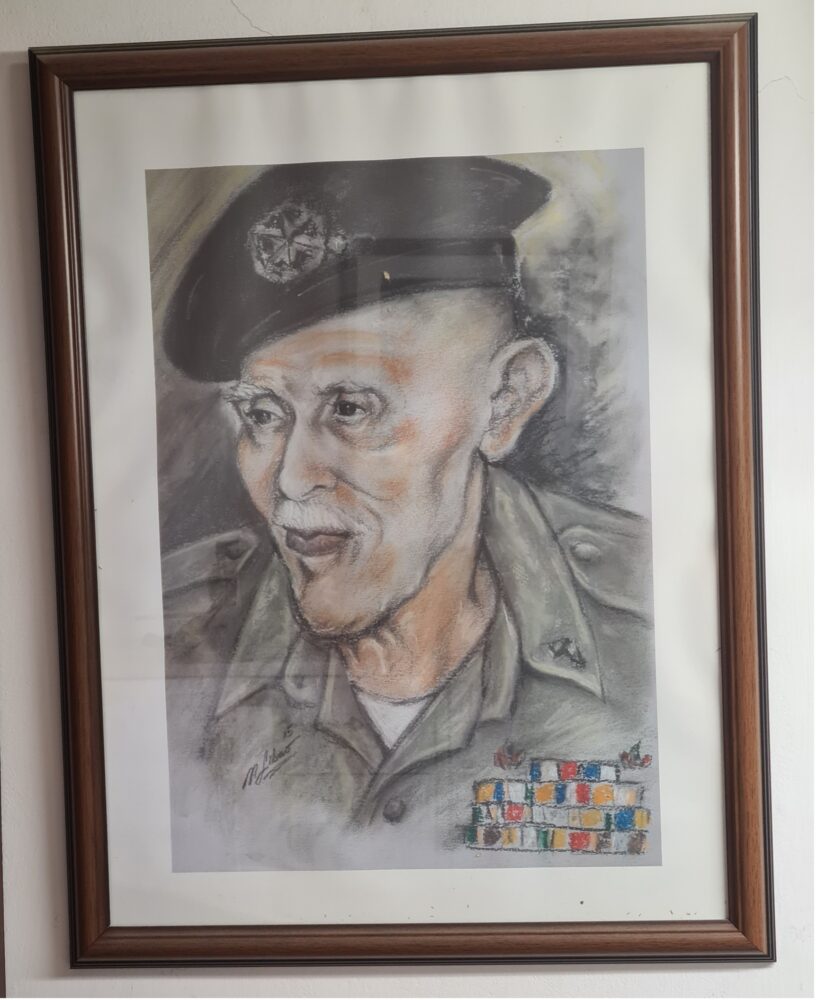
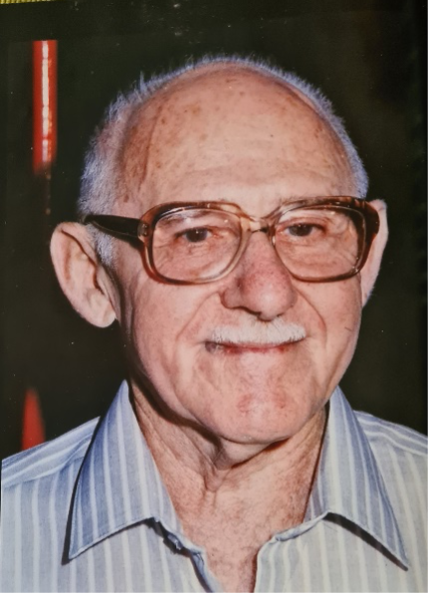
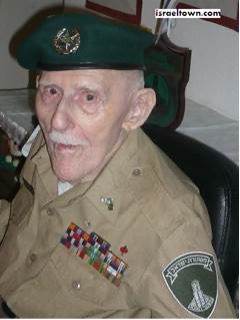
Father, over 100 years old, in an accurate depiction wearing Border Police uniform.

Dedication
Dedication in Insignias
I would like to dedicate this collection website to my late father, Ben Zion Solomin, who started the collection and gave it to me as a Bar Mitzvah gift. This dedication is accompanied by the relevant insignias.
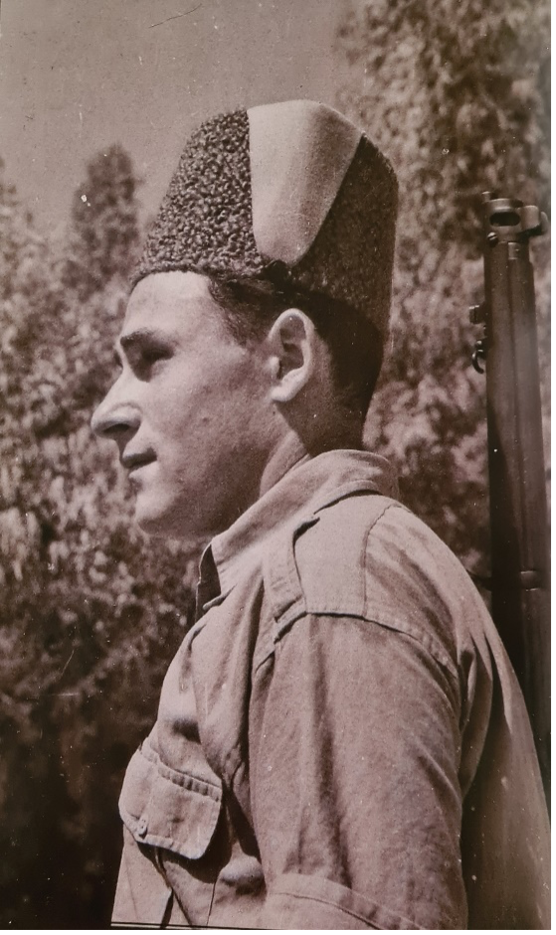
My father devoted his life to security. Even in his hometown of Dvinsk (now Daugavpils) in Latvia, he joined the ranks of Betar-Latvia, known as “Hatt,” which was part of the Trumpeldor Organization. There, he trained in fencing and Krav Maga (hand-to-hand combat with sticks), skills that came in handy when defending Jews during anti-Semitic pogroms. Due to the rampant anti-Semitism, my father participated in several self-defense actions with Betar members during his youth and even took part in defending Jews who were attacked in the city of Kraslava.
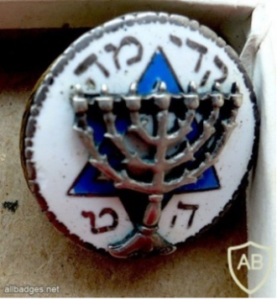
During a visit by Ze’ev Jabotinsky to the city, Ben Zion served as his bodyguard.
My father immigrated to Israel on the eve of Rosh Hashanah 1934, arriving at Jaffa Port and then heading to Moshav Ramat Tiomkin (now part of Netanya), which served as a training base for the Irgun. There, he joined the Irgun.
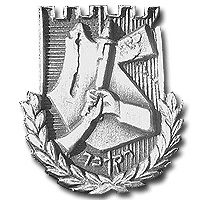
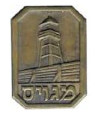
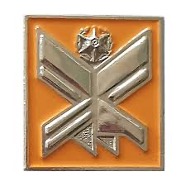
Later, he joined Betar’s labor battalion in Rosh Pina, with its insignia featured here. His platoon mate was Lt. Col. Marcel Tobias, who later founded the Paratroopers School and Israel’s first commando course.
Marcel was the only one to wear four different backgrounds to his paratrooper wings: red (combat jump), green (commando), white (paratrooper instructor), and blue (regular).
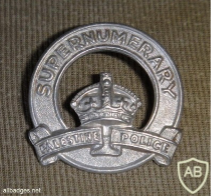
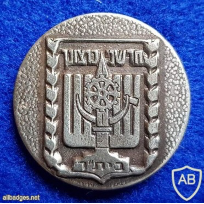
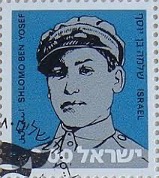
During the 1936 Arab Revolt, my father enlisted as a British Mandate police constable (Noter). He also served as a “slicker,” responsible for the secret arms cache, from which Shlomo Ben-Yosef, the first Irgun martyr, and his comrades from the Rosh Pina labor battalion took weapons.
As a constable, my father participated in securing the construction of the Northern Border Fence.
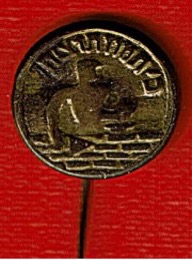
The date of the 20th of Tammuz 1939 marks the completion of the Northern Fence, and my father also took part in the heroic settlement of Hanita as part of the “Tower and Stockade” campaign.
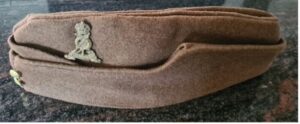
After the Arab Revolt, World War II broke out. My father enlisted in the British army in July 1940, serving in the Royal Engineers, Company 606.
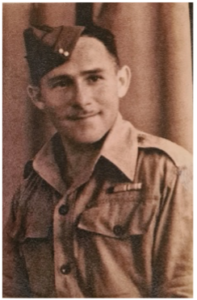
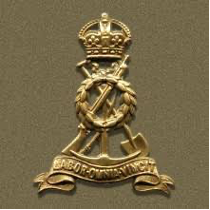
On the evening of April 29, 1941, in Kalamata, Greece, he volunteered alongside Australian and New Zealand soldiers to fight the German paratroopers. During the battle, he was wounded in the arm by a bullet, his second injury. The first occurred in Kazan during World War I, when at the age of four, he was wounded by a Bolshevik bullet during the October Revolution.
On that day in Kalamata, around 10,000-13,000 British soldiers, including around 2,000 Palestinian volunteers, most of them from the Royal Engineers, were captured. As Jews, they endured severe abuse and forced labor in the coal mines. At the end of the war, they were forced on a death march from Silesia to central Germany, walking for over three months in the snow. After exactly four years, on April 29, 1945, they were liberated. American soldiers handed them rifles so they could participate in the final days of the war. In the last days of the war (which ended nine days later on May 8, 1945), they killed an SS officer from the SS Feldgendarmerie military police unit. One comrade took the officer’s boots, another his Schmeisser submachine gun, and my father, of course, took two insignias: a Nazi buckle and a distinctive gorget with insignias. My father said that this gorget was worn by only a select few and granted them the authority to direct convoys as they wished.
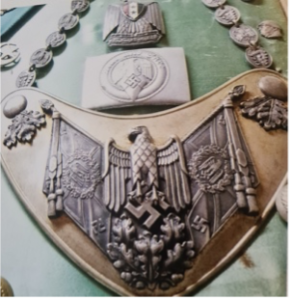
These were the first two insignias in my father’s renewed collection after his previous one was lost when he was captured. The gorget is extremely rare, likely produced in the last days of the war. I searched military museums and Nazi insignia catalogs but found no evidence of it.
Upon his return to Israel, my father reunited with his friends from the Irgun, who had since split, some remaining in the Irgun and others joining Lehi. Both sides accused the other of stealing their weapons. My father, who held the sanctity of weapons in the highest regard, decided to join the Haganah. He later fought in the defense of Afula during the War of Independence.
After the establishment of the State of Israel, he joined the Israel Police.
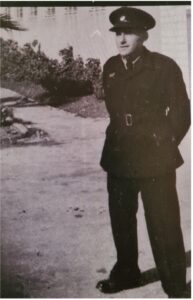
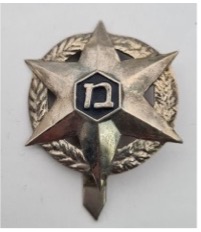
In 1952, after the disbandment of the Frontier Corps, my father joined a special unit of the Afula Police, specializing in fighting infiltrators. The unit, which included Druze, Circassians, and Bedouins, became the foundation for the establishment of the first unit of the Border Police, founded by Shmuel Eitan in 1953 (later Commissioner, and brother of Raful). My father continued his service in the Border Police until 1975.
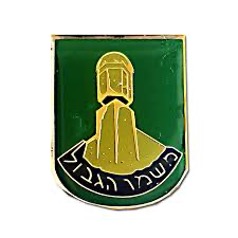
He then volunteered with the Civil Guard in Afula, completing a 45-year long and storied security career.
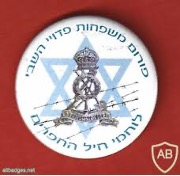
At the age of 100, my father joined the “Forum of Families of POWs from the Royal Engineers,” which had just been founded. Ben Zion made a point of attending every forum event until his death at the age of 102.5.
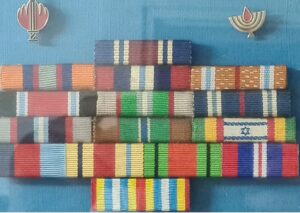
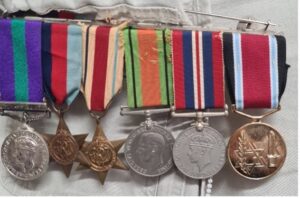
During the forum’s first conference in 2013, the Head of the Medals Division at the Ministry of Defense at the time, Mr. Lavi Aryeh, awarded him all of these medals, declaring him the most decorated soldier in Israel.
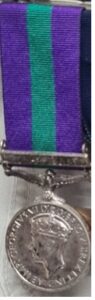
Later, it was discovered that my father was entitled to an additional British medal for his service as a constable. Notably, this was the PALESTINE medal with a bar engraved PALESTINE, different from an identical medal with a bar engraved 1945-1948 PALESTINE.
At the forum events, I wear my father’s engineer’s hat and medals on the right side, as per British tradition (descendants wear medals on the right, while personal medals are worn on the left chest).
Flags and honorary shields my father received:
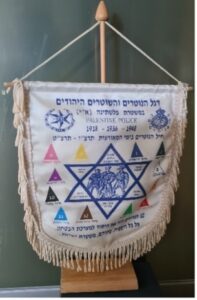
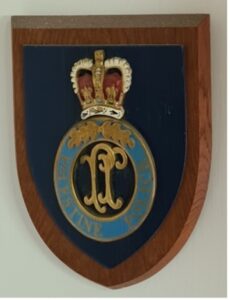
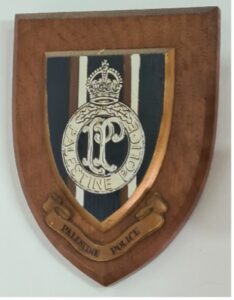
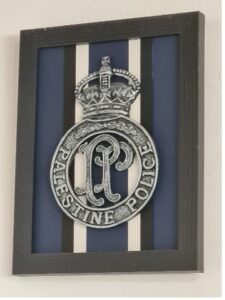
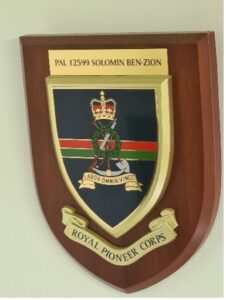
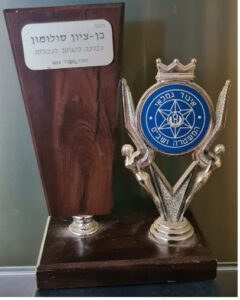
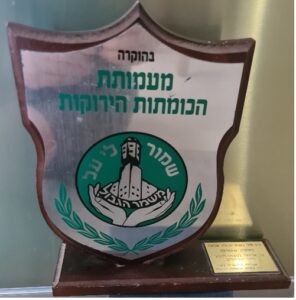
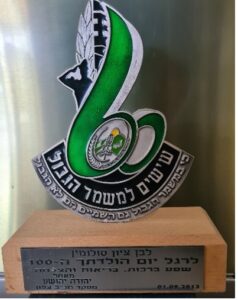
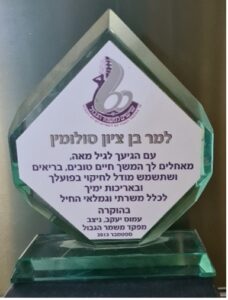
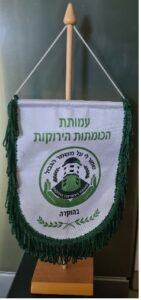
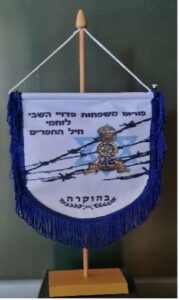
Plaques and honorary shields my father received.
In conclusion, you can see all the medals and insignias of Ben Zion Solomin.
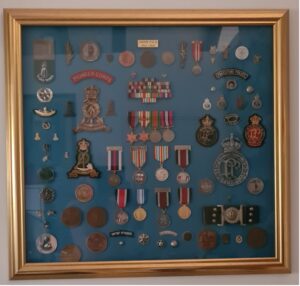
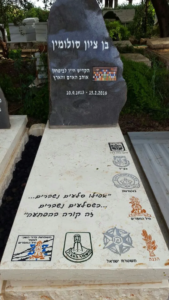
In 2016, Ben Zion passed away at the age of 102.5. His funeral took place in Kfar Tavor, where his body was draped in the national flag, and a Border Police honor guard carried him to his grave, accompanied by his family, loved ones, and members of the Forum of Families of POWs from the Royal Engineers.