
“”Pre-State” refers to the period in the history of the Land of Israel that preceded the establishment of the State of Israel on May 14, 1948, and included the period of the Jewish “settlement”, the British Mandate, and the struggle to establish a Jewish state, a period in which an organized Jewish entity with institutions, underground movements, and settlement developed, while dealing with British rule and the Arab population.
Characteristics of the “Pre-State” period:
• The Hebrew Yishuv: The development of the Jewish community in the Land of Israel, from pioneer settlement, through the second and third immigration, to the establishment of national institutions.
• The Ottoman period and the “old Yishuv”: The years before World War I, in which a traditional Jewish entity and new communities existed.
• The British Mandate (1920-1948): The British government recognized the historical connection of the Jewish people and promised the establishment of a national home, which allowed for accelerated growth of the settlement and the development of its institutions, but also led to Arab resistance.
• The national institutions: The establishment of a Jewish Agency, the JNF, a health insurance fund and other institutions, which formed the basis for a future state.
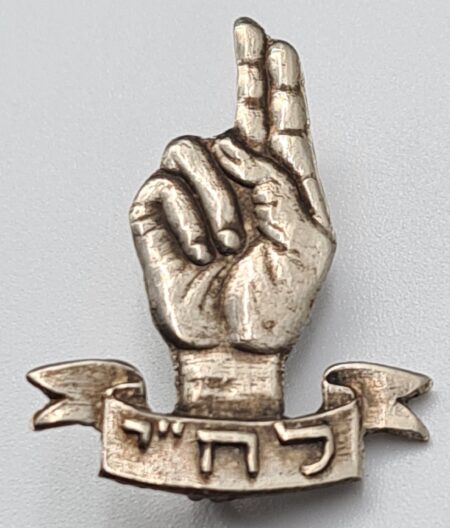
• The underground: The Haganah, Etzel, and Lehi organizations worked to protect the settlement and achieve independence, alongside the political struggle.
• The struggle to establish a state: Starting from the UN resolution on partition, through the riots and the War of Independence, and ending with the declaration of independence itself, as described in the “Declaration of Independence.”
In short, “pre-state” is the period in which the Jewish community operated as a nearly fully sovereign community, in preparation for the establishment of the independent Jewish state, the State of Israel.
“Pre-State” refers to the period in the history of the Land of Israel that preceded the establishment of the State of Israel on May 14, 1948, and included the period of the Jewish “settlement”, the British Mandate, and the struggle to establish a Jewish state, a period in which an organized Jewish entity with institutions, underground movements, and settlement developed, while dealing with British rule and the Arab population..
Characteristics of the “Pre-State” Period:
• The Hebrew Yishuv: The development of the Jewish community in the Land of Israel, from pioneer settlement, through second and third immigration, to the establishment of national institutions.
• The Ottoman period and the “Old Yishuv”: The years before World War I, in which a traditional Jewish entity and new communities existed.
• The British Mandate (1920-1948): The British government recognized the historical connection of the Jewish people and promised the establishment of a national home, which allowed for accelerated growth of the settlement and the development of its institutions, but also led to Arab resistance.
• The national institutions: The establishment of a Jewish Agency, the JNF, a health insurance fund and other institutions, which formed the basis for a future state.
• The underground: The Haganah, Etzel, and Lehi organizations worked to protect the settlement and achieve independence, alongside the political struggle.
• The struggle to establish a state: Starting from the UN resolution on partition, through the riots and the War of Independence, and ending with the declaration of independence itself, as described in the “Declaration of Independence.”
In short, “pre-state” is the period in which the Jewish settlement functioned as a nearly fully sovereign community, in preparation for the establishment of an independent Jewish state, the State of Israel.
General Background In Israeli historiography, it is customary to see the year 1882 as the year in which the process of Zionist settlement in the Land of Israel began. In contrast to previous Jewish immigration to the land that was religious in nature, the immigrants who came in the first wave of immigration in 1882
“The First Aliyah” – Although they were religious, they saw the settlement of the Land of Israel as part of the renewal of Jewish nationalism. They did not settle in the four holy cities where a traditional community existed, but established new settlements and began to develop the new Jewish settlement in the Land of Israel. This Aliyah effectively laid the institutional and ideological foundation that led to the establishment of the State of Israel.
In 1948, the organizational structure developed in Israel by the Zionist movement lacked political sovereignty, and was therefore defined as a voluntary structure.
pre state israel
The period referred to as “pre-state Israel” generally
covers the time in the Southern Levant region—also known as Canaan, Palestine, or the Holy Land—before the formal establishment of the modern State of Israel on May 14, 1948.
Key periods and events during this time include:
• Ancient History: The region has a long history dating back to antiquity. It was home to ancient Israelite kingdoms in the Iron Age, as well as various other peoples and civilizations, including Canaanites, Assyrians, Babylonians, Persians, Greeks, and Romans. The area was predominantly Jewish until the Jewish-Roman wars of the 1st and 2nd centuries CE, after which the demographics shifted.
• Ottoman Rule: The region was part of the Ottoman Empire from 1517 until the end of World War I. During this era, Jewish communities (known as the Old Yishuv) lived mainly in religious centers such as Jerusalem, Safed, and Hebron.
• Rise of Zionism and Aliyah: In the late 19th and early 20th centuries, the rise of Zionism in Europe, a Jewish nationalist movement, led to increased waves of Jewish immigration (known as aliyah) to the region. The New Yishuv comprised immigrants who aimed for economic independence and nation-building.
• British Mandate for Palestine: Following WWI, Britain was granted control of the region by the League of Nations as Mandatory Palestine, a period that lasted from 1920 to 1948. The British had publicly committed to the creation of a Jewish national home in the 1917 Balfour Declaration, which fueled Arab-Jewish tensions and the rise of both Jewish and Arab nationalist movements.
• UN Partition Plan: After World War II and increasing conflict in the area, Britain handed the issue to the United Nations. In November 1947, the UN General Assembly voted for the partition of Mandate Palestine into separate Jewish and Arab states, with Jerusalem under international administration. The Jewish leadership accepted the plan, while the Arab side rejected it.
• Civil War and Independence: A civil war ensued following the UN vote. On May 14, 1948, as the British Mandate officially terminated, the State of Israel was declared. This declaration immediately led to the 1948 Arab-Israeli War as neighboring Arab states invaded, which ultimately established Israel’s independence and defined its initial borders.
PRE STATE ISRAEL
“Pre-State Israel” refers to the period in the land of Israel (then called Palestine) before the modern State of Zionist movement built the foundational institutions, infrastructure (like Tel Aviv), and self-governing bodies (like the Yishuv) that established the Jewish state in 1948, following the British Mandate (post-Ottoman Empire) and the UN Partition Plan, characterized by growing Jewish immigration (Aliyah) and political organization.
Key Periods & Developments
• Ancient Roots: The land has a long history, with ancient Israelite kingdoms existing for centuries before being conquered by various empires (Assyrian, Babylonian, Roman, etc.).
• Ottoman Rule (until 1917): For centuries, the region was part of the Ottoman Empire, with a diverse population including Arab and Jewish communities.
• British Mandate (1920-1948): After World War I, the League of Nations gave Britain control of Palestine, tasked with facilitating the “Balfour Declaration” for a Jewish national home.
• Zionist Immigration (Aliyah): Waves of Jewish immigration, especially after 1904 (Second Aliyah), brought socialists, builders, and pioneers who established the first kibbutz (Degania) and the city of Tel Aviv (1909).
• Building the Yishuv: Jewish residents (the Yishuv) created political parties, workers’ unions, Hebrew-language institutions, and self-defense groups (like Hashomer) to build society and protect against hostility.
• Pre-State Governance: A sophisticated political system emerged, effectively acting as a shadow government, capable of steering the community and making binding decisions, laying groundwork for statehood.
• UN Partition (1947): The UN voted to split Mandatory Palestine into separate Arab and Jewish states, leading to the 1948 Arab-Israeli War and Israel’s declaration of independence on May 14, 1948.
In essence, “pre-state Israel” describes the foundational decades when the Zionist movement organized, built, and prepared the Jewish community in Palestine for self-rule, transitioning from Ottoman to British control, and finally declaring independence.
HAYSHUV
https://he.wikipedia.org/wiki/%D7%94%D7%99%D7%99%D7%A9%D7%95%D7%91
The history of Israel-Palestine before 1948
https://www.heyalma.com/israel-guide/history-of-israel-palestine-before-1948/
Yishuv (Pre-State)
https://israeled.org/topic/zionism-and-other-jewish-history/yishuv/