
Showing the single result
History
The beginning of epaulettes in the Hellenistic-Roman military uniforms, which originated there in shield scales as part of the warrior’s armor.
However, the immediate origin is in bundles of ribbons on military coats from the late 18th century, some of which were decorative items and some of which prevented the shoulder strap from slipping. These ribbons were fastened with a knot that left the exposed end free. This formed the design basis of the epaulette as it developed during the 18th and 19th centuries.
From the 18th century in the French and other armies, epaulettes indicated rank. Officer ranks were worn on the right or left shoulder or both. Later, a counter epaulette without the fringe ribbons/threads was used, which was worn on the shoulder opposite the shoulder with the single epaulette. Officers’ epaulettes were in gold or silver, and those of other ranks had epaulettes of colored cloth.
Some flexible metal epaulettes were popular in various armies during the 19th century, but were rare in the field. They were called shoulder scales, such as those worn by the U.S. Cavalry, U.S. Infantry, or U.S. Artillery between 1854 and 1872.
In the early 18th century, epaulettes became a distinguishing feature of a given rank, leading to officers from military units without epaulettes petitioning to be granted epaulettes so that their status would be recognized and respected.
During the Napoleonic Wars and consequently during the 19th century, units of grinders, light infantry, riflemen and other specialized infantry units from European armies wore cloth epaulettes made of woolen threads in different colors to distinguish them from regular infantry soldiers. Airborne artillery (then the Air Force) wore shoulder pads resembling epaulettes. Heavy artillery wore tiny balls that represented ammunition.
An intermediate form in some armies, such as the Russian army, are the shoulder boards, which are epaulettes that have no fringe or expansion beyond the shoulder seam. The shoulder board originated in the 19th century as a simpler version of the heavy, conspicuous epaulette with its silver and gold threads.
Today the epaulette has mostly been replaced by a rigid 5-ribbed shelf called a shoulder board, a fabric tube with a flat strap worn over the shoulder strap and bearing embroidered or attached metal rank insignia.
The advantages are the ability to be easily replaced on justified occasions.
In the Imperial German Army until World War I, officers up to and including the rank of captain wore shoulder straps without cords as a uniform for duty, while for regular service they used shoulder straps made of silver braid woven together.
In the German Army from 1919 to 1945, the shoulder straps were octagonal for senior officers and generals.
In the British Army, with the introduction of the khaki uniform in 1902, the use of the shoulder strap was discontinued and ranks embroidered on the jacket cuff began. However, in World War I, this made it easier for enemy snipers to target officers, and the rank was then transferred to the shoulder strap.
Shoulder straps in the country
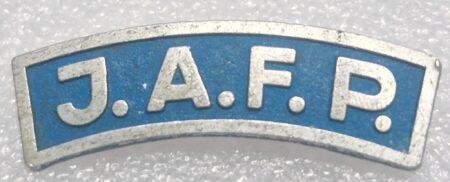
In the early days of the IDF, immediately after the end of the War of Independence, it was required to prepare shoulder straps for officers who did not necessarily pass an officer course but served in officer positions such as administrative officer, judicial officer, medical officer, etc.
Later, non-officer positions were also added, such as a reporter for the Air Force newspaper, the Air Force Academy, and more
According to the type of material, the period in which it was created can be diagnosed:
1. Late 1940s-1950s Very stiff fabric probably reinforced with glue
2. 1960s-early 1970s Thick, stiffened fabric but more flexible than its predecessor
3. 1970s and later Very thin fabric
For example, the government officer in the picture is from the IDF headquarters
In parallel with these shoulder straps, shoulder straps for the various courses also developed, initially just a colored plastic ribbon, in the 1960s plastic ribbons with combined colors began to appear, such as the various courses at the Air Force Technical School and so on.
In the 1960s and 1970s, rigid shoulder straps were also created for military boarding schools, with “ranks” or stages of study at the boarding school on them. The same was true for the stages of the pilot course and the captain courses.
In the 2000s, shoulder straps were also created for cadets – UAV operators (blue and green) or for course stages, for example, at the school for loading inspectors and so on.
In the 2000s, dedicated shoulder straps were also developed for the various courses in the police, the Border Guard, the Prison Service, and even the Civil Defense and the MDA, not just for courses.
In the second decade of the 2000s, upgraded and more elegant course tags appeared made of satin fabric, with the symbols of the school where the training was taking place. The phenomenon began in the Air Force, but the phenomenon also trickled down to the “Greens”. By and large, most of the epaulettes in Israel are made of fabric with silk-screened lettering, woven material, and embroidery.
Shoulder tags
http://www.dgalim.co.il/page.aspx?cat=6&cat-sub=266
Following updated guidance published by the Regime and Discipline Branch of the Human Resources Division, in collaboration with the Women’s Service Section at the Yohalam, it was agreed to produce shoulder straps also in the feminine form according to various military professions, which until recently were only in the masculine form:
Paramedic
Medical Officer
Legal Officer
Military Photographer
Military Reporter
The IDF added that starting next week, shoulder straps will be gradually replaced to suit female soldiers serving in these professions, with procurement and distribution being done according to the instructions of the IDF Supply Center.
Colors in the epaulettes
https://www.fxp.co.il/showthread.php?t=19808523
Chungs
https://www.ruvik.co.il/%D7%94%D7%9E%D7%99%D7%9C%D7%95%D7%9F-%D7%9C%D7%A6%D7%91%D7%90%D7%99%D7%AA-%D7%9E%D7%93%D7%95%D7%91%D7%A8%D7%AA/%D7%A6/%D7%A6%D7%95%D7%A0%D7%92%D7%99%D7%95%D7%AA.aspx
On the shoulder straps of the uniform (where you put a hat) is there a red, white, blue stripe of what army is this? Is it the uniform of the Border Guard?
https://stips.co.il/ask/13829013/%D7%91%D7%A7%D7%A9%D7%A8-%D7%9C%D7%A6%D7%94%D7%9C-%D7%9E%D7%99-%D7%A9%D7%9E%D7%91%D7%99%D7%9F-%D7%A9%D7%99%D7%9B%D7%A0%D7%A1
Flight course epaulettes
https://he.wikipedia.org/wiki/%D7%A7%D7%95%D7%A8%D7%A1_%D7%98%D7%99%D7%A1_(%D7%A6%D7%94%22%D7%9C)
Captains Course Epaulettes
https://he.wikipedia.org/wiki/%D7%A7%D7%95%D7%A8%D7%A1_%D7%97%D7%95%D7%91%D7%9C%D7%99%D7%9D
Hallmarks – Officers and Course Attendees
https://www.army.co.il/234-2
/